Ward Lab at Berkeley
Understanding the biology of neurodegeneration
We study how disruptions in essential cellular functions lead to age-related neurodegenerative disorders, such as amyotrophic lateral sclerosis, frontotemporal dementia, Alzheimer’s disease, and Parkinson’s disease. By revealing how aging and genetics disrupt these functions, we identify therapeutic targets and treatments to protect neurons and maintain cognitive function.
Combining iPSC models, functional genomics, and mechanistic studies to power new discoveries
Original line drawings
Disease models
We engineer human induced pluripotent stem cells (iPSCs) to model how genetic variants disrupt the function of brain cells.
Functional genomics
Using pooled CRISPR screens in these models, we systematically link genes to disease-relevant phenotypes at scale.
Mechanistic cell biology
We combine microscopy, biochemistry, and computational methods to establish how these genes and variants cause disease.
From human stem cells to neurons
We developed a simple method to differentiate large numbers of human induced pluripotent stem cells (iPSCs) into excitatory neurons.1, 2 This method is now used by hundreds of laboratories worldwide. These neurons can be produced at scale, enabling biochemical and genomic experiments that were previously limited to cancer cell models.
Detailed differentiation protocols are available on protocols.io (1, 2, 3), and plasmids are available from Addgene.
The iPSC Neurodegenerative Disease Initiative (iNDI)

Michael Ward and Mark Cookson (NIA) co-directed iNDI, a multi-institute NIH project supported by the National Institute on Aging and NINDS. The initiative genetically engineered more than 500 isogenic iPSC lines carrying mutations linked to inherited forms of neurodegenerative disease.3
Isogenic lines share a matched genetic background, allowing researchers to distinguish the effects of a disease-associated mutation from other genetic differences between individuals. Comparing models across diseases can identify both shared pathways and effects specific to individual mutations.
Sharing these resources is central to iNDI. Cell lines are distributed through The Jackson Laboratory (JAX). Since 2022, the project has supplied cell lines to more than 1,000 laboratories in over 30 countries.
Functional genomic tools for the community

We helped establish KOLF2.1J as a reference human iPSC line for researchers. This well-characterized line provides a common genetic background for disease modeling and genomic studies, helping laboratories compare results across experiments.4 With collaborators, we have developed transgene cassettes that resist differentiation-related silencing in iPSC models, enabling long-term expression of CRISPR machinery and other transgenes,5 as well as potent, compact pooled sgRNA libraries for perturbation experiments.6 We also helped develop methods to readily differentiate iPSCs into additional cell types for screens, including inhibitory neurons,7 microglia,8 motor neurons,9 and skeletal muscle.10, 11
Identifying genes that control neuronal resilience
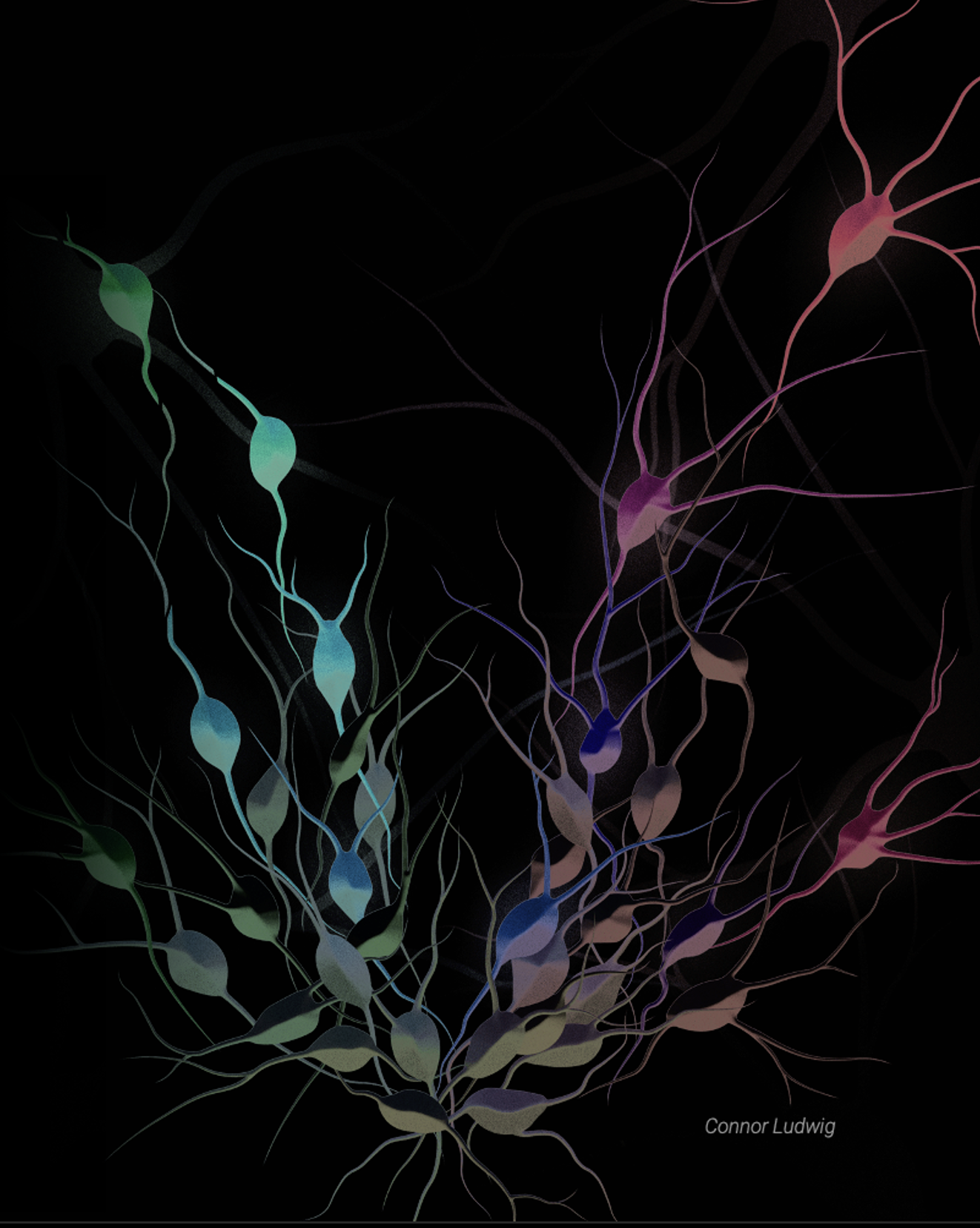
Forward genetic screens, combined with iPSC disease models, enable unbiased discovery of disease pathways. These techniques generate rich datasets that reveal how genetic perturbations alter neuronal survival, protein levels, and cellular states, fueling mechanistic studies.
Genetic screens in human neurons
With our longstanding collaborator Martin Kampmann, we established the first platform for pooled CRISPR screens in human iPSC-derived neurons. The technology platform set the stage for increasingly powerful screens in sophisticated and diverse ranges of iPSC models.1, 2, 3, 4, 5, 6
Next-generation, high-content screens
With collaborators at the Broad Institute,1, 2 we are combining optical pooled screening (OPS) with our iPSC models. Microscopy-based imaging allows us to determine how individual cells respond to a genetic perturbation; in situ sequencing then identifies the barcoded perturbation in each cell. Subsequent AI analysis of imaging data reveals how genes affect cellular programs and how genetic perturbations relate to one another.
How disrupted cellular functions cause disease

We use microscopy, biochemistry, and computational techniques to determine causal relationships linking genetic variants to disease biology. We combine studies in human iPSC-derived neurons and other disease-relevant cell types with studies of patient tissue and large datasets to uncover how disrupted cellular pathways lead to neuronal dysfunction and death.
These efforts have led to fundamental discoveries about the underlying causes of age-related neurodegenerative disorders, the identification of therapeutic targets, and new disease biomarkers,1, 2, 3 as well as a new class of potential therapies targeting UNC13A mis-splicing4 that are now in clinical trials for ALS.1, 2
Group Leader
Michael E Ward, M.D., Ph.D., is a physician-scientist and practicing neurologist who holds the Schekman Family Chancellor’s Chair in Neuroscience at UC Berkeley. He has a joint appointment in the Department of Neuroscience and in the Division of Molecular Therapeutics in the Department of Molecular and Cell Biology. He is also a member of the Helen Wills Neuroscience Institute and an investigator at the Innovative Genomics Institute.
Before joining Berkeley, Dr. Ward was a Senior Investigator at the National Institute of Neurological Disorders and Stroke at the National Institutes of Health. He completed his neurology residency and behavioral neurology fellowship at UCSF and his postdoctoral training at the Gladstone Institutes.
Over the past decade, his lab has contributed substantially to our understanding of the underlying causes of age-related neurodegenerative diseases. Dr. Ward has received numerous awards throughout his career, including the Keith R. Porter Fellow award for Cell Biology. He is a member of the Science Translational Medicine Board of Reviewing Editors and an elected member of the ASCI and AAP. He is a co-founder of Trace Neuroscience.
Lab members and alumni
Publication list
Opportunities to join the lab
We consider exceptional postdoctoral candidates on a rolling basis. If you’re interested in joining us, email Michael Ward an updated CV and a short description of why you want to work in our lab. Please write this yourself, without AI.
Students currently enrolled in a Berkeley PhD program are welcome to contact us about a rotation. Please email Michael Ward an updated CV and a brief note about what you hope to learn during your rotation and why our lab interests you. Please write this yourself, without AI.
We welcome undergraduates at all levels and from all backgrounds. We accept applications twice a year, for two weeks shortly after the spring and fall semesters begin. A committee of lab members reviews the materials you submit below. Please apply through this form rather than emailing Michael Ward directly.
Applications close at 11:59 p.m. Pacific time on the final day. Each round opens on the first day of instruction. Spring calendar · Fall calendar

Ward Lab
Li Ka Shing BuildingRoom 230A
1951 Oxford Street
Berkeley, CA 94720 michael.ward@berkeley.edu